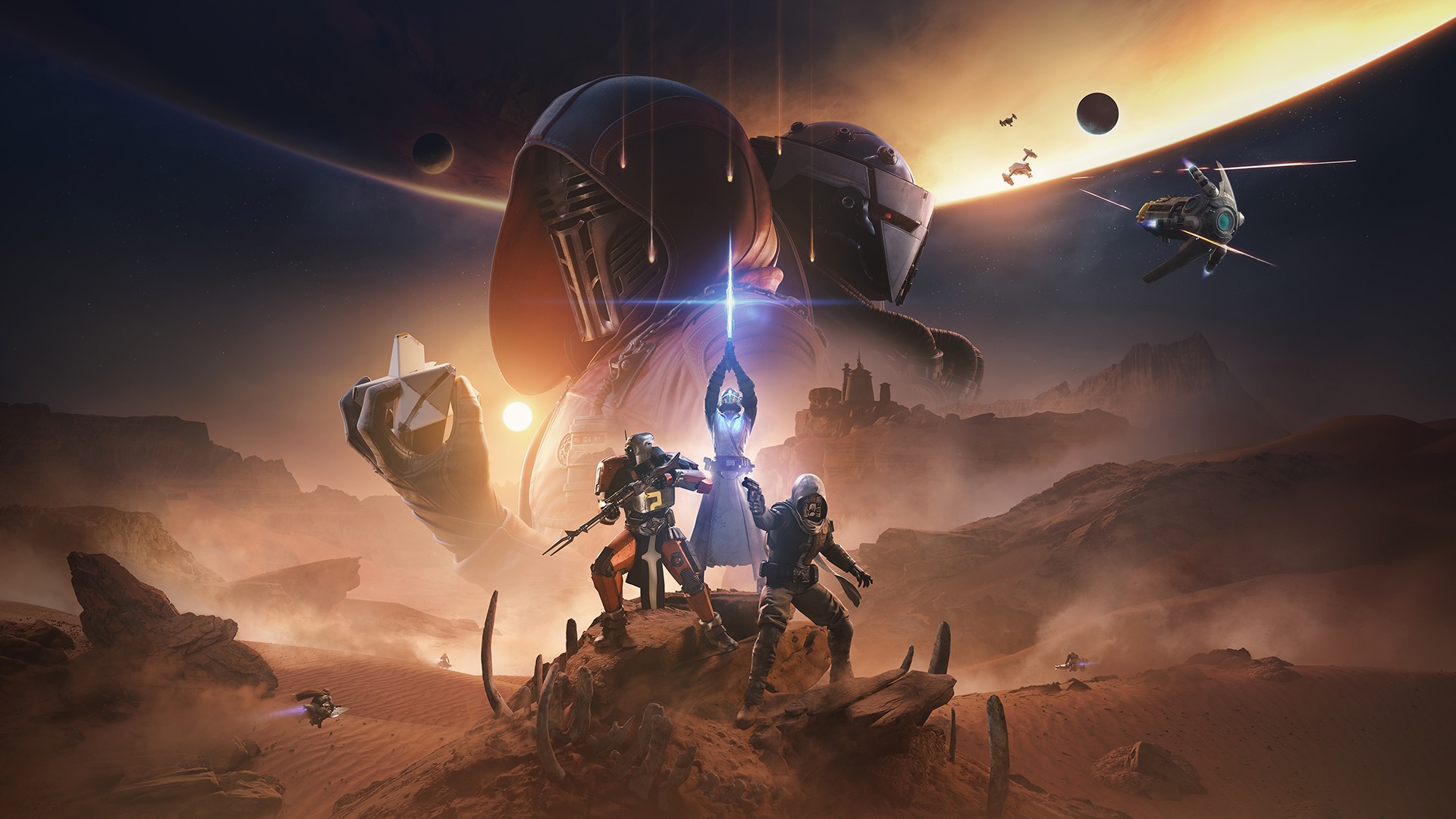
On Thursday, May 21, 2026 Bungie announced that they will deliver their final live service update to Destiny 2 in a move that surprised fans of the genre defining looter shooter.
While some were expecting such a move after almost two years of steadily decreasing player counts, I can’t help but be shocked that a game that set its peak concurrent player counts on steam after 2023’s Lightfall, and nearly matched it with 2024’s The Final Shape, didn’t have a longer runway before this decision was made. It should not have come as a surprise that player counts would be suppressed after the climactic confrontation with the witness served as the culmination of ten years of the Destiny franchise, but it seems as if Bungie was not prepared for how severe the drop off would be. We’ll come back to that in a moment.
After The Final Shape, Bungie announced a new saga of Destiny 2, The Fate Saga, which promised to be a rebirth of Destiny for years to come. The Fate Saga was to bring with it atleast 4 expansions, starting with already released The Edge of Fate and Renegades, followed by the not-yet-release Shattered Cycle followed by The Alchemist. These 4 moderately sized expansions would kick off this new life for Destiny by following a new release cadence, replacing the stale Expansion + 4 seasons structure with a new focus on 2 “Rise of Iron” sized expansions per year with smaller “season-lite” major updates in between.
I personally was a fan of this new structure because it sought to bring more lasting changes to the core game in the form of system overhauls and permanent content updates as opposed to the fleeting activities brought by seasons that were retired each year leaving what felt like a hollowed out core at the start of each release year. By focusing on bespoke expansions rather than what sometimes felt like copy-pasted seasonal activities, it allowed the developers to try out more varied and interesting gameplay opportunities. Edge of Fate and Renegades brought light Metroidvania and Rogue-Like concepts into the main game in an effort to spice up the experience and reduce the treadmill like monotony of past efforts.
While attractive on paper, in practice these first outings in the new structure left a lot to be desired. The Edge of Fate’s Metroidvania elements boiled down to simple traversal puzzles as a frustratingly controlled ball like a poor mans Metroid Prime, and Renegades Star Wars coated Destiny turned off fans of the beautiful and uniquely Destiny Flavor of older releases. But even though somewhat maligned, I appreciated that they were trying something, anything to keep the franchise fresh after a dozen years of releases.
Aside from these expansions content being flawed, it was the core system overhauls that truly turned players away from the game. The Edge of Fate update brought with it a renewed focus on grinding power levels and gear through the portal, a dull interface that replaced the beloved and flavor-filled Director that we played through over the years. By redirecting the player experience into the portal the developers removed some of the mystique and organic world building that made Destiny feel like Destiny, asking players instead to choose tiles off of a boring UI full of old well-trodden activities. I say full, but unfortunately the portal was hardly half full, offering a small selection of the many of the activities already in the game, let alone those that had previously been removed from the seasonal resets and vaulted content.
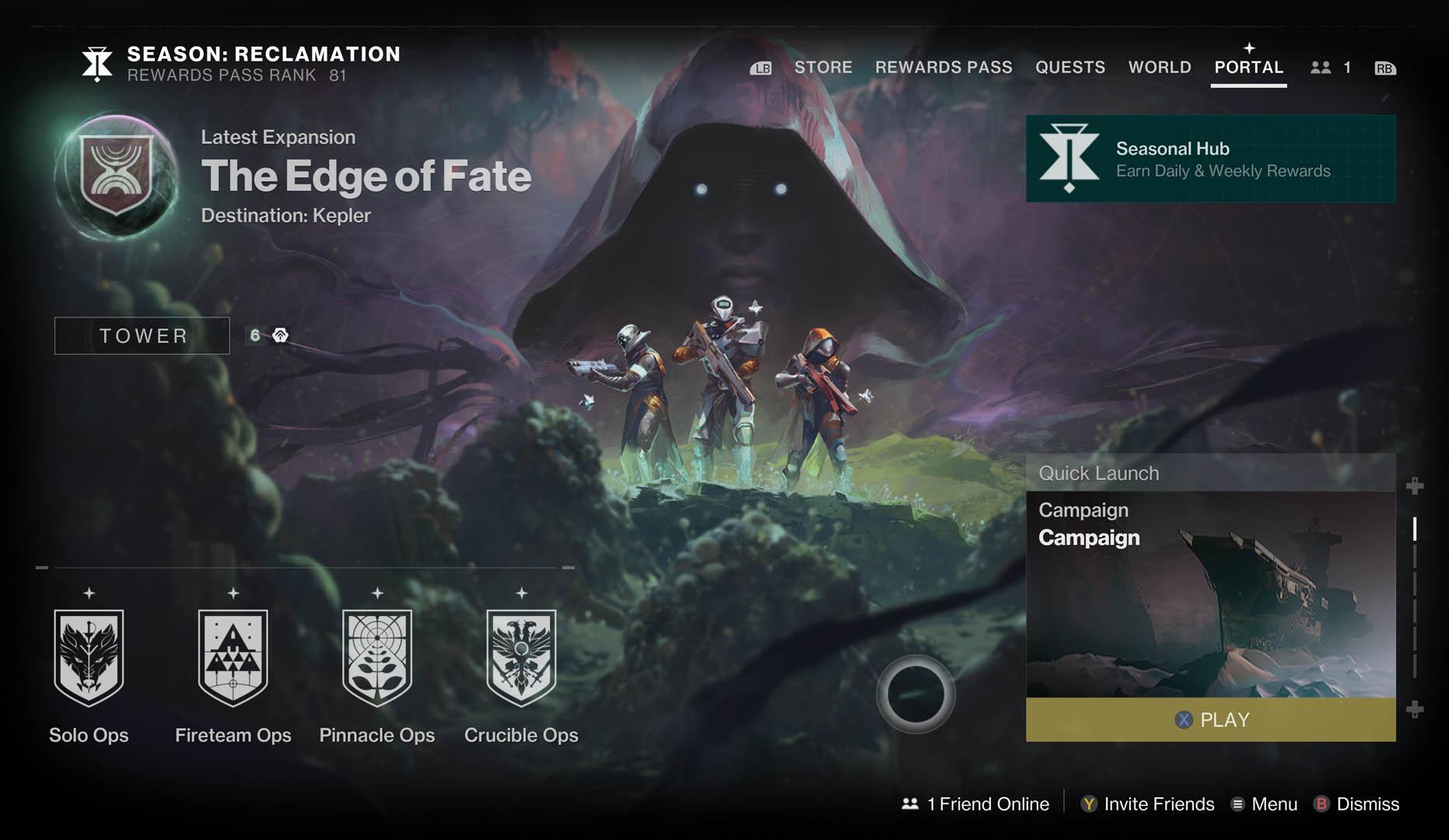 I may explore the pro’s and con’s of the portal system in another article (because I do believe there were pro’s, but I believe the most offensive part of the portal was that rather than offer a method for players to engage with older content as they please, it demanded that they do so almost exclusively. Aside from the main campaign content of the Edge of Fate, it was the main method of leveling for those early months, forcing players to grind away at boring, repetitive activities rather than remain engaged with new content.
Aside from the portal interface being a downgrade, Bungie also put forth a steeper power and loot grind, resetting our power and demanding us climb to 450 (then 550 with the Ash and Iron Update in September), with the main way of doing so being to grind activities in the portal. To make matters worse, the new tiered loot system would doll out low-tiered gear while grinding with higher tiered and more desirable gear only being available in the higher levels, after many many hours of grinding monotonous activities in the portal. And remember, these activities were many of the same strikes and missions we had been playing for years.
After all these years of power level grinding, I believe players were simply burnt out on the prospect of climbing the mountain yet again, only this time it was a steeper, taller mountain with poor rewards near the base. When you know a tier 4/5 weapon is waiting on the other side of a 100+ hour grind, it feels defeating to see a tier 1/2 weapon drop as you clear your 40th solo ops activity. For some this renewed focus on leveling and seeing the high-tiered loot on the other side was refreshing, but for others who were willing to come back after the final shape, but were not interested in this grind, this was a time to enjoy the campaign, and step away until the next release.
My point in retreading this old ground is to paint a picture of how a game that had some high peaks within the past few years ended up in such a dire position. This new Saga of Destiny started with a diminished player base coming back after the Final Shape, and made some serious miscalculations off the start that put off people who returned.
Earlier I commented that I thought the Fate Saga and Destiny 2 as a whole would have a longer runway in this new era, and I stand by that. Similar to the process the MCU has struggled with after Endgame, slowly rebuilding interest in a new saga, and repairing a poor start one high quality release at a time could allow Destiny to organically flourish into another golden age. But that slow rebuild would require commitment and patience on the part of Bungie and perhaps more importantly Sony.
Unfortunately I think the perfect conflux of events occured to force Sony/Bungie’s hand.
- The poor reception to the overhaul of core, hard to repair game systems
- The natural downturn in player interest after The Final Shape
- Disillusionment with Bungie partnering with Star Wars rather than treading their own original Destiny Path
- The high cost associated with managing two live service games (Destiny and Marathon)
- The middling performance of Marathon (relative to expectations within Sony)
- Sony’s desire to stop some bleeding after buying Bungie for $3.6 billion dollars to assist with their doomed push for live service games across multiple studios
Between Destiny’s lull in player support and community sentiment, and Marathon’s player counts being even lower than Destiny’s, I can see how Sony and/or Bungie reached an inflection point. The decision to throw all of Bungie’s weight behind one of these games, while having a small team incubating Bungie’s next thing (assuming they make it that far), is logically sound even if it must’ve felt like an impossible decision. While I don’t necessarily think they bet on the right horse, I can understand the decision to throw their weight behind a fresh game with room to grow, be light of its feet, and adjust to player feedback without the technical and sentimental baggage that comes with a game as rich and dense as Destiny.
I’m not sure if the decision to focus on Marathon over Destiny will prove to be the correct one long term, but I understand the decision. It certainly will be tumultuous time for Bungie, and I hope they have the runway now to make Marathon better before returning to Destiny in the future.